beyond 4K
A personal essay on the evolution of cinema, display technology, and why every generation thinks it has peaked.
blogs
After a tiring day of work, I find unwinding with books or movies very easy. For forty minutes, I completely immerse myself in the world of some fictional character where they go about their set of problems. Their issues, sometimes, are as simple as stopping an assassination, and other times, as complicated as saving the world from the evil dark lord who really needs to get another hobby.
A couple of days ago, my mother was unwinding by watching a rather famous Bollywood franchise called Bhool Bhulaiyaa — 3 on Netflix. The first part of this psychological comedy horror was released in 2007, and was a major hit in the Indian box office, earning a gross profit of over ₹400 crores.
I distinctly remember when I watched the first part of the franchise, I was around seven years old. When we walked out of the cinema hall, my tear-stricken self was clutching my father's arms very tightly. While I had failed to understand the comedy aspects of the movie, the jumpscares and horror aspects kept me up for several nights. There are a lot of words I would use to describe my parents, but cinephile isn't one of them. Trips to the cinema hall in our household were very scarce. Hence for the next couple of days, a major discussion in my house revolved around the fact that cinematography had undergone a major glow-up since the last time they'd been in a theatre.
Now, India saw its first cinema, a silent film called Raja Harishchandra, in 1913. Even though we eventually got dialogue-d movies, it wasn't until 1937 that we saw colors on the big screen. My parents often reminisce about the time when the entire neighbourhood would sit down together at someone's house to watch television. In their time, Doordarshan National, the only available television channel, would broadcast an hour-long episode. In fact, Doordarshan featured its first colored telecast on August 15, 1982.
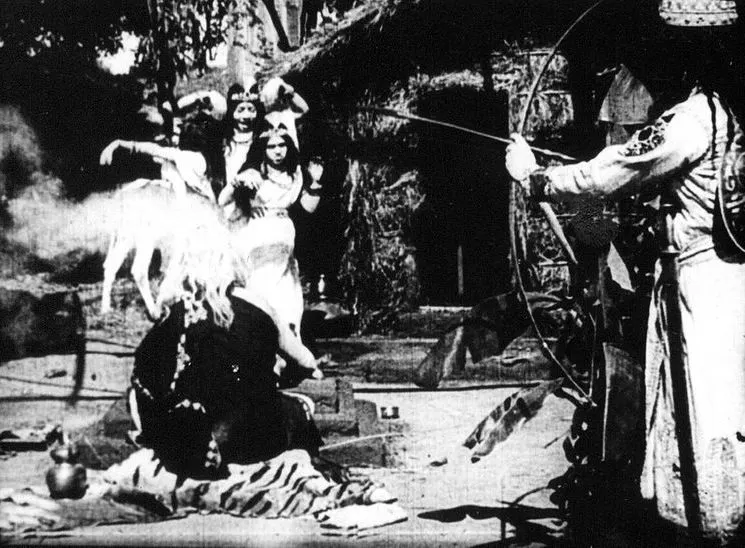
When I first decided to watch Raja Harishchandra, I was appalled by the low resolution. My grandparents, however, told me when this movie hit the box office, people thought that the entertainment business had reached its peak. From the fact that people could access productions from the leisure of their homes, to the picture clarity, there is no way it could be topped. Only, it did.
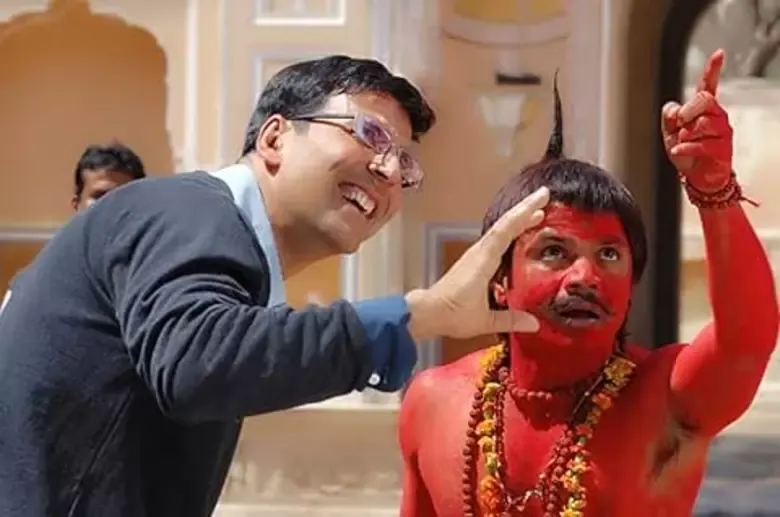
The picture above is a snip from the famous ₹400 crores grossing film that I was talking about earlier. While I do admit, this image is a little cleaned up, and I couldn't find the original resolution anywhere on the internet, this picture still shows the stark difference from how cinema has evolved over the years. The onset of the twenty-first century saw the rise in sales of LCDs (Liquid-Crystal Displays) TVs, and CRTs (Cathode-Ray-Tube) based TVs were practically a thing of the past. People were now proudly boasting about watching videos with a resolution of 480p SD (Standard Definition).
We had definitely peaked with video resolutions now. There is no way it could possibly get better, right?
Wrong.
Last year (2024) saw the release of the third movie in the Bhool Bhulaiyaa franchise. So, when my mother was watching this horror/comedy, I decided to join her. While nothing can beat the quality of screenwriting the first movie has, I have to admit, the third part did not disappoint me. You can call it nostalgia, or maybe it's the magic of legends like Vidya Balan and Madhuri Dixit, but either way, I find myself too biased to give an objective critique.
In one of the scenes of the movie, both the phenomenal actors were serenading and dancing in a royal hall and I found myself thinking, "Wow! Every little detail is visible on the screen.
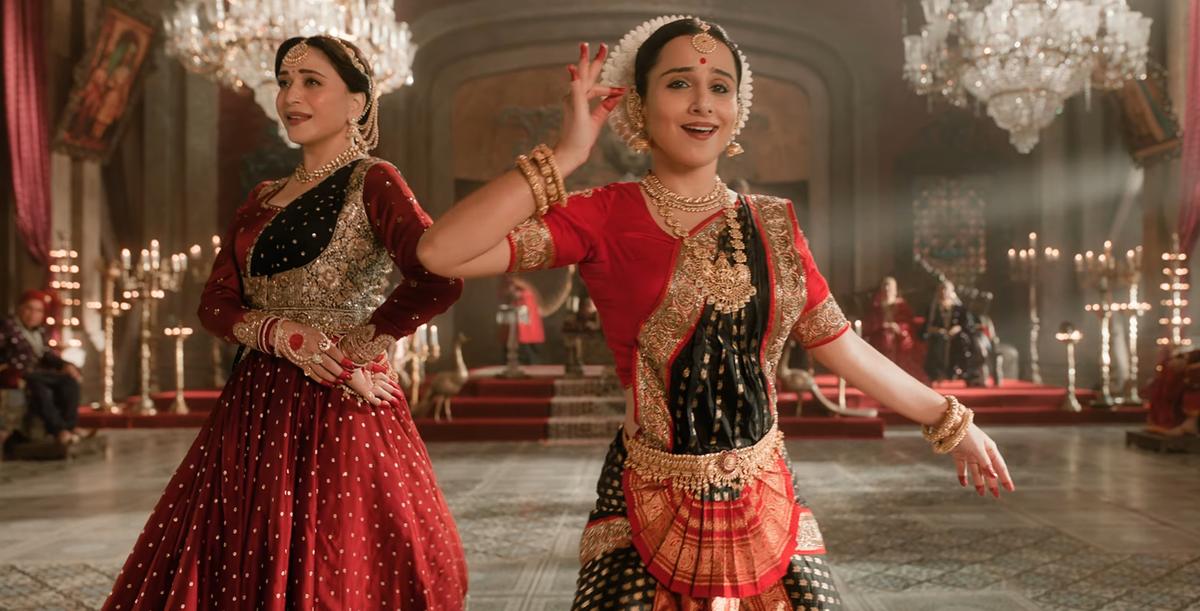
From the gigantic chandelier to the intricate embroidery of the traditional Kathak and Bharatnatyam outfits. It can't get any better, right?"
Wrong.
Every era has had its "This is it!" moment — only to be proven wrong by the next big breakthrough. As Sheikh Yamani put it:
The Stone Age didn't end because we ran out of stones.
Innovation doesn't stop when we think we've reached the peak; it stops when we stop pushing forward.
Remember when 1080p felt like the crispest resolution possible? Now, 4K is the standard in cinemas, and 8K is already knocking on the door. But if history has taught us anything, it's that we're nowhere close to the final frontier of entertainment.
Imagine this — Bhool Bhulaiyaa — 17 has just hit the theatre. Your kids are getting ready to watch the franchise that you could never stop talking about. A lot of things have changed now, there are flying cars, and humanity is on the verge of colonizing Mars. But you know what hasn't changed? The basic storyline of Bhool Bhulaiyaa — the hero has to save his better half from the evil aatma (spirit) that has taken over her body.
As you step into the cinema hall, you're handed a sleek, compact version of Meta Quest VR glasses. There's no giant screen in front of you, no plush red seats arranged in rows. Instead, the moment you put on the headset, the theater disappears. You are no longer a spectator — you are inside the film.
Yes, that's how movies are screened now.
Suddenly, you find yourself standing in the middle of a grand royal palace. The chandeliers above you flicker as an eerie gust of wind sweeps through the hall. The rich scent of sandalwood and aged mahogany fills the air, as if the palace is alive. You glance down — you're wearing traditional attire, dressed to blend into this world.
As the hero enters, dodging falling chandeliers and running through endless corridors, you feel the ground beneath you vibrate. A whisper brushes past your ear, sending a shiver down your spine. You turn, only to see her — Manjulika — staring right at you. Your heart pounds. You remind yourself: it's just a movie. But it feels real.
Around you, characters move as if you're one of them, never breaking the illusion that you don't belong here. You are clutching your stomach as tears stream down your eyes because of how hilarious the movie is. Your child, on the other hand, is covering his eyes with his tiny hands as he shivers and he shrinks into his seat. Too young to catch the comedic nuances, he only sees the eerie visuals: the haunting Manjulika dance, the ominous palace at night, the perfectly timed jump scares.
As the movie ends, the makeshift world dissolves, and you find yourself back in the theater. You remove the headset, slightly disoriented but thrilled. You smile, lost in nostalgia. You remember watching the third installment years ago, sitting next to your mother, marveling at the visuals — back when video resolution was still so… low. You step outside the theater, pause for a moment, and think, 'It can't possibly get any better than this, right?'
Wrong.